






AI Tools That Actually Talk to Each Other
Hi, my name is Chris 👋🏻 I’ve spent the last couple of years building AI-assisted tools that run my own agency. They share one look, one login, and one database, and they talk to each other.
I believe in transparency. You should know: the average pricing before filling out a form, the entire process, and the tools we run ourselves before we ever build yours.
Let’s knock out pricing. An audit starts at $7,500, and most full build-outs land between $30,000 and $60,000. Not a weekend prototype, not enterprise either.
The AI build-out
Everyone wants to know what this costs before a sales call. Fair. Ballparks here, and the whole process is outlined further down the page.
This is what you get:
One home base
One login and one design system across every tool. Your team opens one app, not five bookmarks.
A shared spine
One database underneath everything. Your client list lives in one place and every tool reads from it.
AI wiring
Every tool speaks MCP, so Claude and ChatGPT can read and write your real data. Ask in chat, get answers from your own system.
Docs and training
Handoff docs and short training videos with every build. The next person (or the next AI session) picks it up cold.
This is what it'll cost:
The audit, a roadmap, bi-weekly demos, and weekly status reports included across all.
$7,500
The audit. Every tool inventoried, data mapped, and a roadmap you could hand any developer (2 weeks)
$30,000
The build-out. Your existing tools moved onto one foundation, one at a time (8 weeks)
$60,000+
The whole system. Build-out plus new tools, integrations, and AI wiring throughout (12+ weeks)
Yea, but your setup may not fall into these simple buckets. That’s exactly what the audit is for.
Are we the right fit?
For teams that want to run their own tools, not rent ours.
Typically not.
You don’t have any tools yet.
Starting from zero is a different (fun) conversation. This page is about putting existing pieces together. Shoot me an email anyway.
You want a chatbot on your website.
That’s a real thing, it’s just not this thing. We have friends that can help here.
You need someone to run your AI strategy.
We build and connect the tools. We don’t write your AI policy or pick your models for you.
Heck yes.
A handful of tools, none of them finished.
Your team built things in bursts of inspiration. Each one is 80% done. The last 20% is our favorite part.
The prototype became load-bearing.
Someone built a quick internal tool six months ago and now the whole team depends on it. It deserves a real foundation.
Five tools, five logins.
Your client list lives in three of them and none of them agree. One shared database ends that argument.
The person who built it moved on.
Or it was built in a chat session nobody can find. We reverse-engineer and document as we go.
Side note: not an agency? If your business has a junk drawer of half-finished AI experiments, this all still applies.
We build this stuff for ourselves first
These aren’t demos. They run Classic City every day, and every practice we’d use on your tools got tested on ours first.

Leo
The front door to the whole operating picture: tasks, meetings, projects, money. One app instead of nine tabs.

The events CRM
Invites, RSVPs, and attendance for every event we host. It answers questions in chat too, because it’s wired for AI.
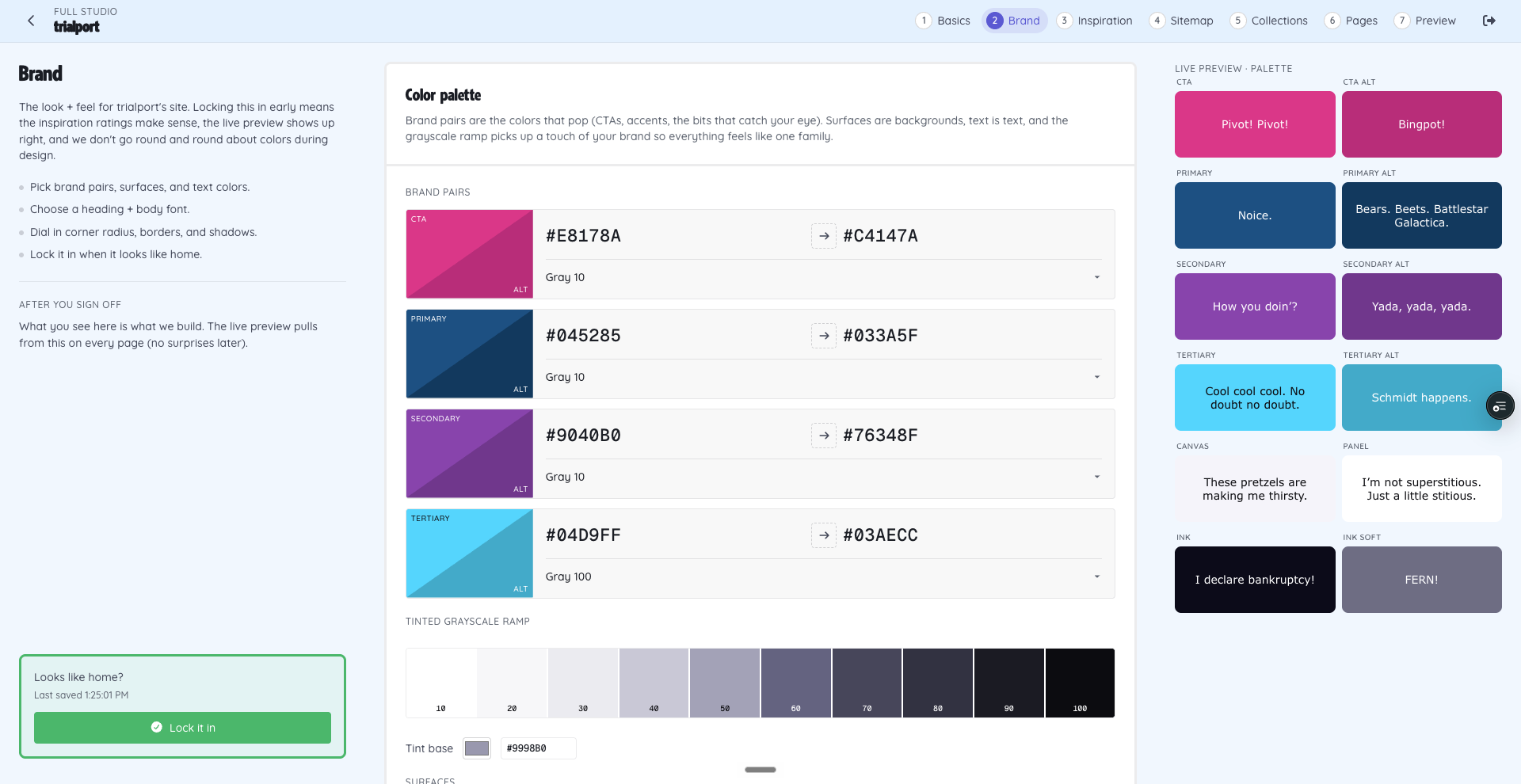
Full Studio
The planning workspace our web clients log into. Seven phases from brand to sitemap, each one pre-filled so nobody starts from a blank form.
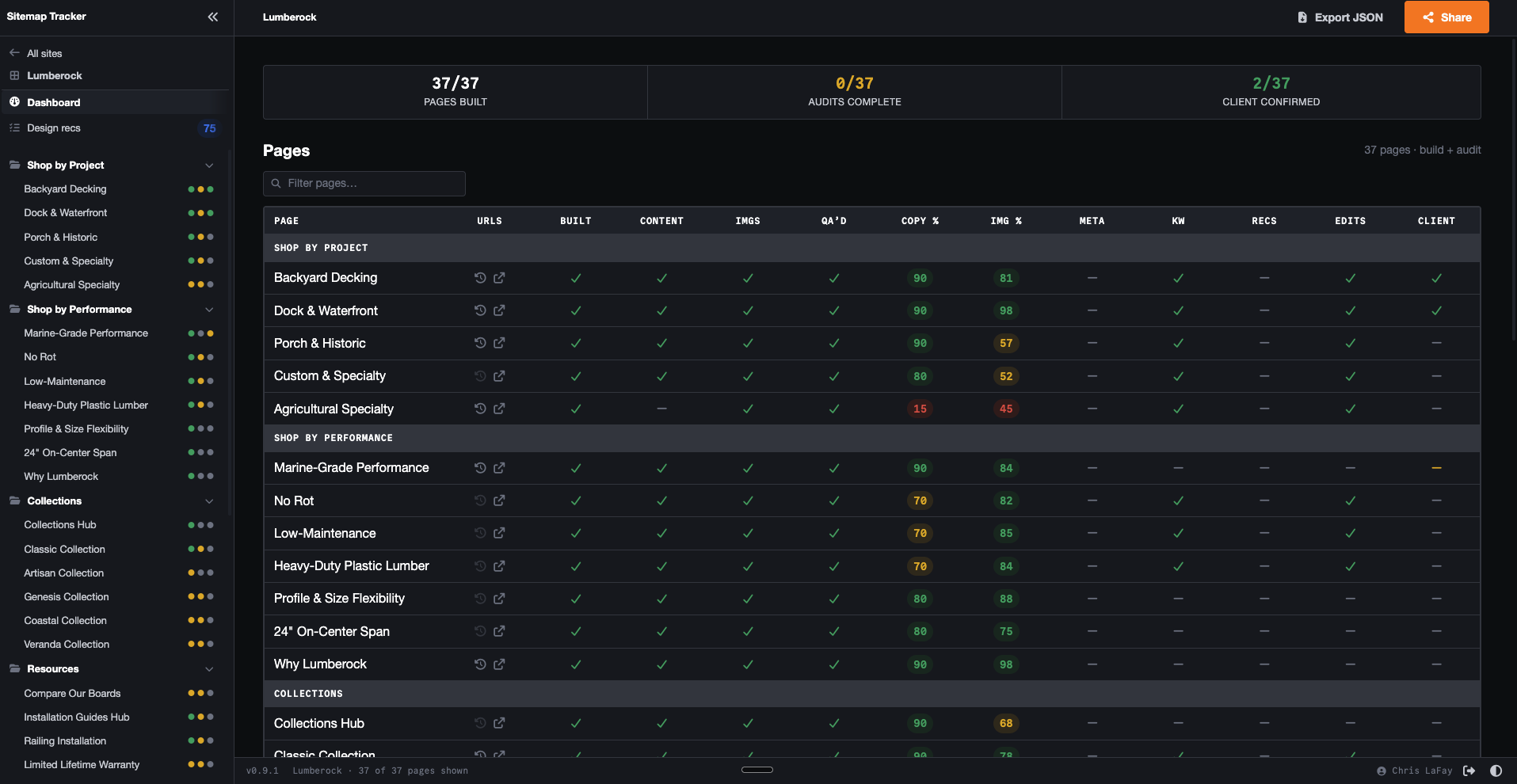
Sitemap Tracker
Every page of a client build tracked from built to audited to client-confirmed. 37 pages, zero spreadsheets.
How the build-out works
Yes, we still build websites
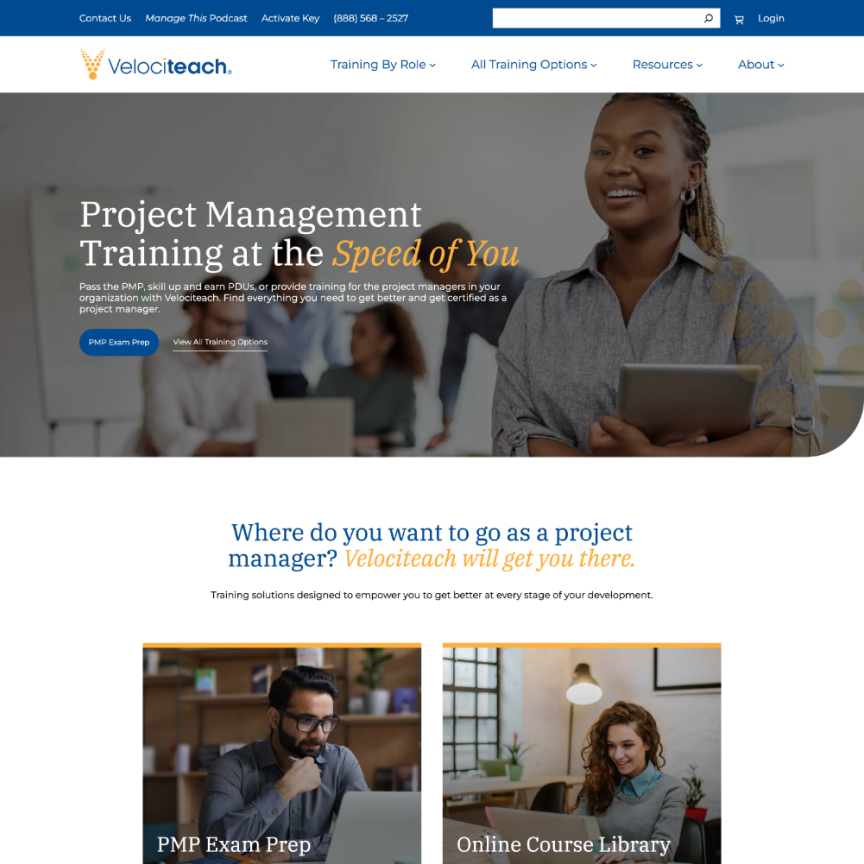
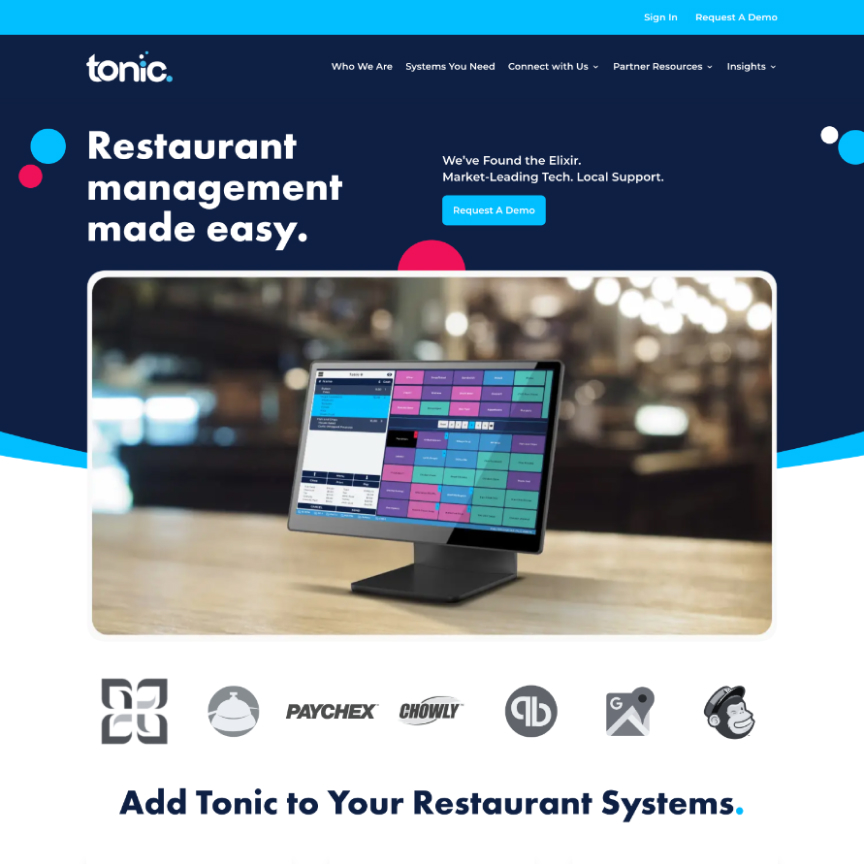
This page is all about the AI tools. But websites have been the day job for 20+ years, and we’d be silly not to show a few. There’s a whole page of this.
Questions people have asked
Nope, that’s the normal case. AI-built code is usually fine at the core. It’s the edges (logins, backups, what happens when two people edit at once) that need adult supervision. We keep what works and shore up the rest.
Only when rebuilding is cheaper than saving it, and the audit tells you which is which. Usually the logic your team built survives; it just moves onto a foundation all the tools share.
Next.js, TypeScript, and Postgres for the apps themselves. And yes, we build with AI too. The difference is 20+ years of knowing what to ask for and what to double-check.
Nope. WordPress is what we build marketing sites on. Internal tools get a modern app stack that’s easier to wire into AI, and the two live happily side by side.
It’s the open standard that lets AI assistants like Claude talk to your actual tools and data. Wire it up once and your team can ask real questions in chat (‘who RSVPed but didn’t show?’) and get answers from your own system.
That’s the whole point. The foundation makes the next tool easier to add, not harder, and every repo ships with docs a new AI session can pick up cold. Your team keeps playing; the system stops fighting back.
Ready to put the pieces together?
Pick a 30-minute slot. Bring the list of what your team has built, and you’ll leave knowing exactly what the audit would cover.